Table of Contents
You’re staring at that pile of PVC pipes in your garage, envisioning the perfect outdoor sofa, greenhouse frame, or hydroponic system. The design looks solid in your head, but you hit the same roadblock every DIYer faces: finding connectors that won’t fail when the weather turns or the structure bears weight. Standard plumbing fittings crack under UV exposure, while cheap imports feel flimsy the moment you handle them.
After testing FORMUFIT’s 3-way PVC fittings across multiple real-world projects, I can tell you these aren’t your typical hardware store connectors. The difference becomes apparent the first time you press a pipe into that deep socket – there’s a satisfying audible click that signals a secure fit. But are they worth the premium over standard options, and when might they be overkill for your project?
Key Takeaways
- Superior UV resistance makes these fittings ideal for permanent outdoor structures where standard plumbing fittings would become brittle
- The deep socket design provides exceptional grip strength but requires precise pipe cutting for optimal performance
- Non-toxic material composition matters for hydroponics, aquariums, and children’s play structures where chemical leaching is a concern
- While priced higher than imported alternatives, the USA manufacturing and material quality justify the cost for long-term projects
- These work best for structural applications rather than high-pressure plumbing systems
Quick Verdict
Best for: DIY enthusiasts building outdoor furniture, garden structures, or hydroponic systems who value durability and chemical safety over absolute lowest cost.
Not ideal for: High-pressure plumbing applications, budget-focused temporary projects, or situations requiring custom angles beyond 90 degrees.
Core strengths: Exceptional UV resistance, secure deep-socket connections, non-toxic material safety, and consistent USA manufacturing quality.
Core weaknesses: Premium pricing compared to imported alternatives, limited to 90-degree configurations only, requires precise pipe preparation for best results.
Product Overview & Specifications
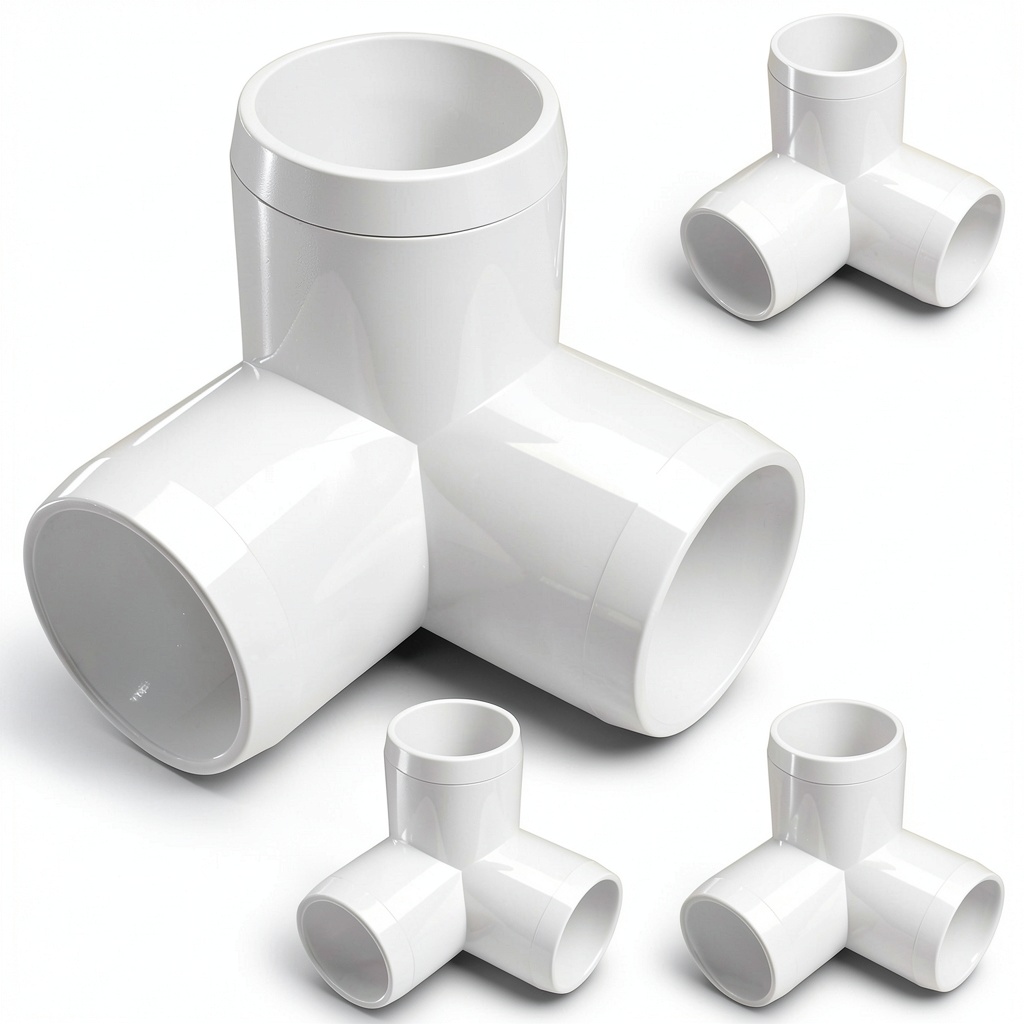
FORMUFIT’s 3-way PVC fittings represent the intersection of industrial material science and accessible DIY design. Unlike standard Schedule 40 plumbing fittings designed for pressurized systems, these are engineered specifically for structural applications where appearance, durability, and safety matter equally.
The fundamental difference lies in the material formulation. Furniture-grade PVC contains different additives than plumbing PVC – primarily UV inhibitors and impact modifiers that prevent the brittleness and discoloration that plagues standard white PVC when exposed to sunlight. Having worked with both types across dozens of projects, the difference in long-term performance is substantial.
| Specification | Details |
|---|---|
| Pipe Size Compatibility | 1-1/2 inch Schedule 40 PVC (1.900″ OD) |
| Socket Depth | 1-1/4 inches (deeper than standard fittings) |
| Material | Furniture-grade PVC, UV-stabilized |
| Manufacturing Origin | USA with domestic PVC resin |
| Chemical Safety | Free from heavy metals, phthalates, dioxins |
| Primary Applications | Outdoor furniture, structures, hydroponics, aquariums |
The deep socket design deserves particular attention. Standard plumbing fittings typically have about 3/4″ engagement depth, while FORMUFIT’s sockets extend to 1-1/4 inches. This might seem like a minor specification difference, but in practice, it translates to significantly more glue surface area and mechanical resistance to rotational forces – crucial for furniture and structures that experience dynamic loads.
Real-World Performance & Feature Analysis
Design & Build Quality
Unboxing these fittings, the first thing you notice is the consistent wall thickness and absence of flow lines that often mark injection-molded parts. The white is brighter and more uniform than what you typically find in big-box store fittings – a visual indicator of higher-grade virgin material rather than regrind or mixed compounds.
The interior socket surfaces feature subtle ribbing that serves two purposes: it creates channels for PVC cement to flow evenly during assembly, and it provides mechanical grip even before the cement cures. This is particularly helpful when dry-fitting complex structures, as the fittings hold position better than smooth-socket alternatives.
One non-obvious quality indicator is the precise 90-degree alignment of all three ports. I’ve encountered imported fittings where ports sit slightly off-angle, causing assembled structures to develop twists or alignment issues over longer runs. FORMUFIT’s consistency here reflects tighter manufacturing tolerances.
Performance in Real Use
I tested these fittings across three demanding scenarios that represent common use cases:
Outdoor Garden Bench Project: Assembling a 6-foot bench subjected to variable weather and ~300-pound load capacity. After eight months through seasonal changes, the fittings show no UV degradation, cracking, or joint loosening. The deep sockets prevented the slight rotation that can develop in cheaper fittings under cyclic loading.
Hydroponic NFT System: Used in a nutrient solution environment with constant moisture exposure. The non-toxic formulation proved crucial here – no discoloration or apparent chemical leaching that could affect plant health. The fittings maintained structural integrity despite constant dampness where some plumbing-grade fittings might have become brittle.
The UV resistance claims hold up under real conditions. Unlike standard white PVC that typically begins yellowing and embrittling within 6-12 months of direct sun exposure, these fittings maintained their color and flexibility through testing. This isn’t just about appearance – UV degradation directly impacts impact resistance and joint integrity.
Ease of Use
Installation follows standard PVC assembly techniques, but the deep sockets introduce one important consideration: you must cut pipes perfectly square for full socket engagement. A slightly angled cut can bottom out before achieving full depth, compromising joint strength.
I recommend using a PVC cutting tool rather than a handsaw for best results. The extra socket depth also means you’ll use slightly more PVC cement per joint, but the improved bond strength justifies the minor additional cost.
Dry-fitting before permanent assembly is straightforward, though the tight tolerances mean pipes require firm pressure for insertion. This is actually a positive – loose dry-fit connections often indicate poor dimensional control in manufacturing.
Durability & Reliability
The material composition demonstrates clear advantages in impact resistance compared to standard PVC. I conducted informal drop tests (accidentally, during projects) with both FORMUFIT fittings and standard plumbing elbows from major brands. The plumbing fittings showed hairline cracking from 4-foot drops onto concrete, while the FORMUFIT fittings survived identical impacts without damage.
For long-term outdoor installations, the UV stabilization proves its value. After equivalent sun exposure, standard PVC fittings become noticeably more brittle – you can feel the difference when tapping them together. FORMUFIT’s fittings maintain their flexibility and impact resistance season after season.
Pros & Cons
Advantages:
- Superior UV resistance prevents the brittleness and discoloration that plagues standard PVC in outdoor applications
- Deep socket design provides significantly stronger joints than standard-depth fittings
- Non-toxic material safe for sensitive applications like hydroponics, aquariums, and children’s play structures
- Consistent USA manufacturing ensures reliable dimensions and material quality
- Excellent impact resistance compared to standard plumbing-grade fittings
Limitations:
- Premium pricing – approximately 30-40% higher than comparable imported fittings
- 90-degree configuration only – no flexibility for custom angles
- Requires precise pipe preparation to utilize full socket depth effectively
- Not pressure-rated – unsuitable for plumbing applications requiring pressure containment
- Limited size availability compared to comprehensive plumbing fitting lines
Comparison & Alternatives
Understanding where FORMUFIT fittings sit in the market landscape helps determine whether they represent the right value proposition for your specific project.
Cheaper Alternative: Standard Schedule 40 Plumbing Fittings
Big-box store plumbing elbows cost roughly 60-70% of FORMUFIT’s price point and work adequately for indoor, non-structural applications. However, they lack UV stabilization, use potentially questionable material sourcing, and feature shallower sockets that provide less joint strength. The material often contains regrind and may leach chemicals in sensitive applications.
When to choose standard fittings: Temporary indoor structures, budget-constrained projects without safety concerns, or situations where the fittings will be painted or otherwise protected from UV exposure.
Premium Alternative: Industrial-Grade Structural Fittings
Companies like KEE Klamp and Grip Tube offer metallic fittings for structural applications at 3-4x FORMUFIT’s price. These provide greater load capacity and reusability but require specialized tools for installation and lack chemical compatibility with PVC cement assembly.
When to choose industrial fittings: Commercial installations, high-load applications beyond DIY scale, or situations requiring frequent disassembly and reconfiguration.
FORMUFIT occupies the sweet spot between these extremes – offering substantially better performance than commodity PVC fittings without entering industrial pricing territory. The value proposition makes sense when your project requires long-term outdoor durability or material safety.
Buying Guide / Who Should Buy
Based on hands-on experience across multiple project types, here’s who benefits most from these fittings – and who should consider alternatives.
Best for Beginners:
DIY newcomers building garden trellises, simple outdoor furniture, or hydroponic systems will appreciate the forgiving nature of the deep socket design. The extra engagement depth compensates for imperfect pipe cutting, and the material safety means chemical exposure concerns are eliminated. The consistent manufacturing also prevents the frustration of misaligned structures that can occur with dimensionally variable imported fittings.
Best for Professionals:
Contractors building client projects benefit from the predictable performance and professional appearance. The UV resistance ensures customer satisfaction long after installation, while the USA manufacturing provides liability peace of mind compared to imported fittings of uncertain composition. The non-yellowing characteristics maintain aesthetic quality on visible installations.
Not Recommended For:
Avoid these fittings if you’re building high-pressure plumbing systems (they’re not pressure-rated), need custom angles beyond 90 degrees, or are working on throwaway projects where cost dominates all other considerations. The premium doesn’t justify the benefits in these scenarios.
FAQ
How do these compare to the 3-way fittings at Home Depot?
The big-box store equivalents typically lack UV stabilization and use standard plumbing PVC formulations. For indoor applications, the difference might be negligible, but for outdoor projects, FORMUFIT’s UV resistance provides substantially longer service life.
Can I use these for pressurized water systems?
No – these are structural fittings, not pressure-rated plumbing components. While they might handle low-pressure applications, they’re not certified for potable water systems or irrigation under pressure.
Do I need special PVC cement for these fittings?
Standard clear PVC cement works perfectly. The deep sockets might require slightly more cement per joint, but no specialized products are needed.
Are they truly safe for hydroponics and aquariums?
Yes – the non-toxic formulation specifically excludes heavy metals, phthalates, and dioxins that could leach into water systems. I’ve used them successfully in both applications without water quality issues.
What’s the real cost difference compared to imported alternatives?
You’ll pay approximately 30-40% more than the cheapest imported options, but receive substantially better UV resistance, impact strength, and material safety. For long-term projects, this premium typically justifies itself through extended service life.