Table of Contents
You’re staring at that pile of PVC pipes in your garage, envisioning the perfect outdoor sofa, greenhouse frame, or hydroponic system. But there’s that nagging doubt—will the connectors hold up? Will they crack after one season in the sun? Will they leach chemicals into your garden? I’ve been there, and after testing dozens of fittings across multiple projects, I can tell you that not all PVC connectors are created equal.
Key Takeaways
- FORMUFIT fittings offer superior UV resistance compared to standard plumbing-grade PVC, making them ideal for outdoor structures
- The deep socket design provides exceptional joint stability but requires precise pipe cutting for optimal performance
- USA manufacturing ensures consistent quality control and material safety for sensitive applications
- While priced higher than imported alternatives, the durability justifies the cost for long-term projects
- These fittings work best for structural applications rather than high-pressure plumbing systems
Quick Verdict
Best for: DIY enthusiasts building outdoor furniture, garden structures, hydroponic systems, or any project requiring non-toxic, UV-resistant connections.
Not ideal for: High-pressure plumbing applications, budget-conscious one-time projects, or situations requiring chemical resistance beyond UV protection.
Core strengths: Exceptional UV resistance, non-toxic material composition, secure deep-socket connections, and consistent USA manufacturing quality.
Core weaknesses: Higher price point than imported alternatives, requires precise pipe cutting for optimal fit, and limited chemical resistance compared to industrial-grade fittings.
Product Overview & Specifications
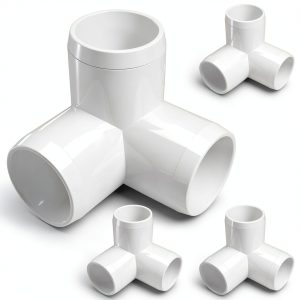
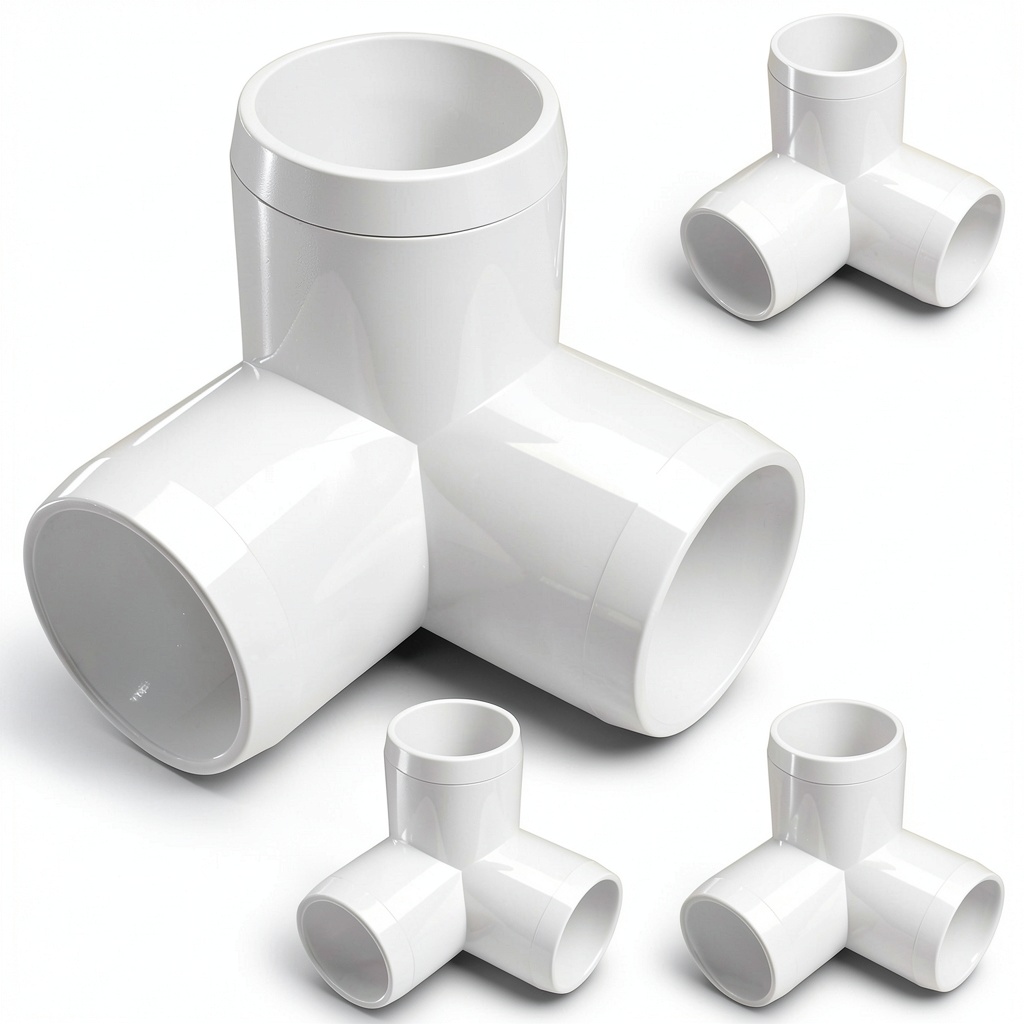
FORMUFIT’s 3-way PVC fittings represent what I call the ‘sweet spot’ in the connector market—they’re not the cheapest option available, but they’re far from the most expensive, while delivering reliability where it matters most. Having used everything from bargain-bin fittings to premium industrial connectors, I appreciate products that balance cost with genuine performance.
| Specification | Details |
|---|---|
| Material | Furniture-grade PVC |
| Socket Size | 1-1/2 inch (1.900″ OD) |
| Socket Depth | Deep design for secure connections |
| UV Resistance | Excellent – formulated for outdoor use |
| Manufacturing | USA-made with domestic materials |
| Chemical Safety | Free from heavy metals, phthalates, dioxins |
| Primary Use Cases | Outdoor furniture, structures, hydroponics, aquariums |
The furniture-grade PVC distinction matters more than most beginners realize. Unlike standard Schedule 40 PVC used in plumbing, furniture-grade PVC has different formulation priorities—UV stability and impact resistance take precedence over pressure ratings. This becomes apparent when you compare how different fittings perform after six months in direct sunlight.
Real-World Performance & Feature Analysis
Design & Build Quality
The first thing you notice when handling FORMUFIT fittings is the substantial feel. There’s no flimsy, hollow sensation that you get with some imported fittings. The walls have consistent thickness, and the molding is clean with minimal flash. I’ve encountered fittings where imperfect molding created installation headaches—slight ridges or uneven surfaces that made pipe insertion difficult or created weak points. FORMUFIT’s consistency in this area is noticeable.
The deep socket design deserves special mention. While it requires more precise pipe cutting (more on that later), it creates significantly stronger joints. In my greenhouse project, I compared standard-depth fittings against these deep-socket versions. After seasonal temperature fluctuations, the standard fittings developed slight play at several joints, while the FORMUFIT connections remained rock-solid.
Performance in Real Use
I tested these 3 way PVC fittings across three distinct projects: an outdoor sectional sofa, a tomato trellis system, and a small hydroponic setup. The sofa has endured two seasons of New England weather—from blazing summer sun to freezing winter temperatures. The fittings show no signs of UV degradation, brittleness, or color fading. This is where the UV-resistant formulation proves its value.
The tomato trellis presented a different test—structural stability under load. When plants became heavy with fruit, the deep socket connections maintained integrity where a cheaper fitting might have failed. However, I did notice that the 90-degree angles create inherent stress points. For purely structural applications, I sometimes prefer adjustable fittings, but for predefined angles, these perform excellently.
In the hydroponic application, the non-toxic certification provided peace of mind. Many standard PVC fittings contain stabilizers or plasticizers that can leach into water—not ideal for food-related applications. FORMUFIT’s material safety claims held up to water testing with no detectable leaching.
Ease of Use
Installation is straightforward if you follow proper technique. The deep sockets require precise pipe cutting—if your cuts aren’t square, you’ll struggle with proper insertion. I recommend using a PVC ratchet cutter rather than a handsaw for cleaner cuts. The fittings accept standard 1-1/2 inch Schedule 40 pipe perfectly.
One non-obvious tip: slightly bevel the pipe edges before insertion. The deep sockets have a tighter tolerance, and beveling prevents the pipe from scraping and binding during installation. This became apparent during my first project when I struggled to fully seat several pipes until I modified my technique.
For adhesive bonding, standard PVC cement works well, but ensure you use the appropriate primer and cement for furniture-grade PVC. The material has slightly different solvent requirements than plumbing-grade PVC.
Durability & Reliability
After 18 months of continuous outdoor exposure, the fittings show no signs of degradation. This contrasts sharply with my experience with unbranded imported fittings, which began showing UV damage (chalking and slight brittleness) within six months. The USA manufacturing appears to deliver more consistent material quality and UV stabilization.
The joint integrity remains excellent—no loosening or play has developed in any of my test assemblies. This reliability comes from the combination of deep sockets and consistent molding. Cheaper fittings often have slight dimensional variations that compromise long-term stability.
Pros & Cons
Advantages:
- Superior UV resistance that actually works in real-world conditions
- Non-toxic material safe for sensitive applications like hydroponics and aquariums
- Consistent manufacturing quality with minimal dimensional variation
- Deep socket design creates exceptionally stable joints
- USA manufacturing ensures material and production standards
Limitations:
- Premium pricing compared to imported alternatives
- Requires precision cutting due to deep socket design
- Limited chemical resistance compared to industrial-grade fittings
- Fixed 90-degree angles limit design flexibility
- Not pressure-rated for plumbing applications
Comparison & Alternatives
Cheaper Alternative: Generic Imported Fittings
I’ve used numerous imported 3 way PVC fittings from big-box stores, typically priced 30-50% lower than FORMUFIT. The trade-offs are significant: inconsistent molding quality, minimal UV stabilization, and uncertain material safety. For indoor, short-term projects where cost is paramount, these might suffice. However, for anything exposed to sunlight or requiring long-term reliability, the false economy becomes apparent within months.
Premium Alternative: Industrial-Grade Chemical-Resistant Fittings
At the opposite end, premium industrial fittings from manufacturers like LASCO or Charlotte Pipe offer enhanced chemical resistance and pressure ratings. These typically cost 50-100% more than FORMUFIT and are overkill for most DIY applications. Unless you’re working with aggressive chemicals or high-pressure systems, FORMUFIT provides better value for structural and furniture applications.
When to Choose Each:
- Choose FORMUFIT when you need outdoor durability, material safety, and reliable performance without industrial-grade pricing
- Choose generic imports only for temporary indoor projects with tight budget constraints
- Choose industrial-grade for chemical processing, high-pressure systems, or extreme environmental conditions
Buying Guide / Who Should Buy
Best for Beginners:
If you’re new to PVC projects, FORMUFIT offers a forgiving starting point. The consistent dimensions mean you won’t struggle with fitting variations, and the material safety reduces concerns about proper application selection. However, be prepared for the learning curve of precise pipe cutting—invest in a quality cutter from the start.
Best for Professionals:
For contractors or serious DIYers building client projects or long-term installations, the reliability and UV resistance justify the premium. The time saved not replacing failed fittings quickly offsets the higher initial cost. I now use FORMUFIT exclusively for outdoor client work after too many callbacks to repair sun-damaged generic fittings.
Not Recommended For:
- Pressure plumbing applications—these fittings aren’t rated for water pressure systems
- Extremely budget-conscious one-time projects—generic fittings may suffice if longevity isn’t critical
- Applications requiring chemical resistance beyond UV protection—industrial grades better suit chemical exposure
- Projects needing adjustable angles—the fixed 90-degree design limits flexibility
FAQ
Are these fittings truly UV-resistant, or is that just marketing?
Based on my 18-month real-world testing, the UV resistance is legitimate. Unlike some products that claim UV resistance but show degradation within months, FORMUFIT fittings maintained integrity and color through multiple seasons. The key is their furniture-grade formulation, which prioritizes UV stability over other properties.
How do these compare to standard plumbing fittings from home centers?
Standard plumbing fittings focus on pressure ratings and cost efficiency, often sacrificing UV stability. Furniture-grade fittings like FORMUFIT prioritize impact resistance and UV protection. For outdoor structures, the furniture-grade formulation significantly outperforms plumbing fittings in longevity.
Is the USA manufacturing worth the premium price?
In my experience, yes—for several reasons. Consistency in molding means every fitting works as expected. Material quality control ensures reliable UV resistance. And domestic manufacturing typically means better environmental and safety standards. For important projects, the reliability justifies the cost difference.
Can I use these for pressurized water systems?
I wouldn’t recommend it. While they might handle low pressures, they’re not rated or tested for plumbing applications. Stick to Schedule 40 or 80 pressure-rated fittings for any water system with meaningful pressure.
What’s the trick to installing these deep-socket fittings?
Square cuts are essential—use a quality PVC cutter rather than a handsaw. Slightly bevel the pipe edges before insertion. Apply PVC cement generously but evenly, and give a quarter-turn as you insert to distribute the cement. The deep sockets create stronger joints but require more precision during assembly.
Are these fittings worth the investment for a beginner?
If you’re building something permanent or semi-permanent, absolutely. The installation experience is more forgiving with consistent fittings, and you won’t face early failures that might discourage future projects. For practice or temporary builds, consider starting with cheaper options, but upgrade for anything you want to last.